

False experts
Trump Derangement Syndrome, part two.

It’s been one of those news weeks that made me want to crawl into a hole and hide. In today’s letter, how the meda enables attention-seeking therapists to cause societal harm.

Last week, The Atlantic published “Why Couples Therapists Are Sick of ‘Therapy-Speak,’” another entry in the saturated “why therapy speak is making things worse” genre of mental health coverage.
I was surprised to see the very first quoted therapist was none other than Jonathan Alpert, subject of the most recent Reality Test and the man who has been on Fox News promoting the pseudo-diagnosis “Trump Derangement Syndrome” as a legitimate condition. In a telling code switch, he is now quoted in The Atlantic about his annoyance with clients misusing the language of clinical psychopathology to serve their own interests.
What is the path from psychotherapist to public representative of therapy? And is the media consulting with the right people?
I recently learned about a longtime favorite secret weapon of journalists – the “dial-a-quote” source. This is a mutually beneficial relationship in which the person writing gets the quote they need for a story they’ve already got in their head, and the person quoted gets the attention they like (as defined by Reality Test’s own favorite dial-a-quote source). It’s the kind of person you can basically hit up knowing they’re likely to confirm the thesis of what you’re writing.
Alpert seems to be pretty excellent at this. One moment he’s in the Atlantic defending the sanctity of diagnostic language, the next he’s on Fox News claiming that anti-Trump protests resemble a “group therapy session” for middle aged white women. He seems to successfully move from outlet to outlet, reframing his views according to what the article needs from him.
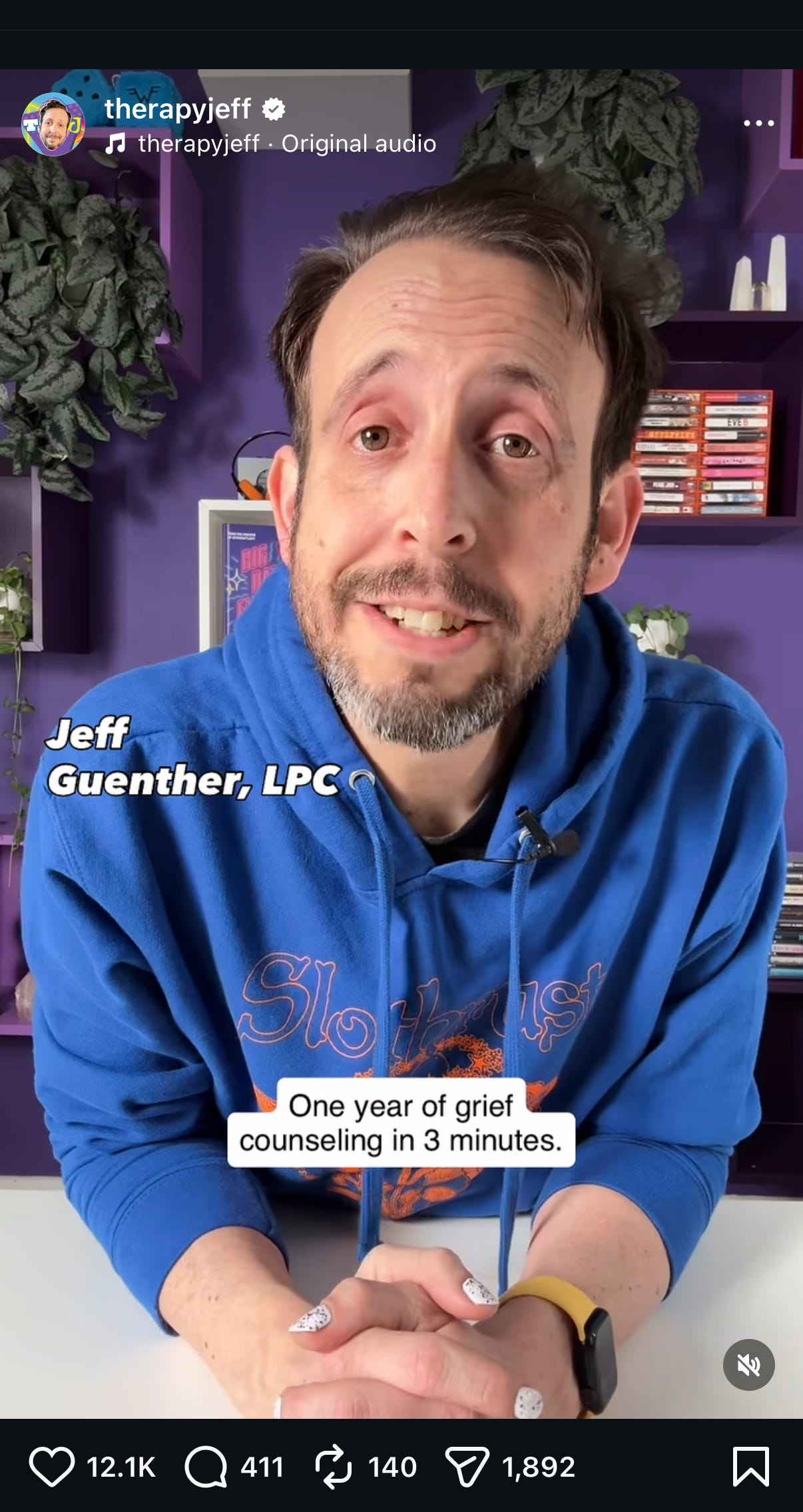
There are certain famous-ish therapists and mental health professionals whom you may recognize if you consume media about mental health. (Have you also noticed that guy TherapyJeff everywhere?) But in a profession that has hundreds of thousands of providers within it, it’s hard to imagine why someone like Alpert who peddles pseudo-clinical Trumpy bullshit and seems willing to mock his clients on television should continue to be cited as an expert source.
Those figures who emerge as public authorities on mental health have a material impact on the way our world is framed. Here’s why this is important. One of the aforementioned awful pieces of weekend news was the violent murder of director Rob Reiner and Michele Singer Reiner.
Donald Trump responded on Truth Social:

Trump’s fondness for invoking so-called TDS for his own personal gain as well as his delusional self-flattery in the face of public grief and fear are neither new nor surprising. But it’s the so-called “experts” actually legitimizing a fake pathology who gave Trump his language here.
It’s easy to see the connection between someone like Alpert and Trump. Any clinician who publicly endorses a politicized fake “diagnosis” lends power to Trump’s violent, self-serving rhetoric. The clinician who does so on multiple platforms, who blames and shames the very people he claims to be his own patients, should not be consulted by any more national news media organizations in the name of credibility. I expect that from Fox News. But I ask for more discernment from the likes of The Atlantic and The New Yorker.
I’ve said it here before, but it bears repeating: Pathologizing political opposition in order to discredit it is a tool of fascism. The journalists who continue to cite those who attempt to legitimize the trollish “TDS” label as their experts ought to branch out from the regular rotating roster of attention-seeking sources.
Now, with all that said…we here at Reality Test are certainly not above being dialed for quote. Just saying.
–
Movie report
I saw Hamnet the other night, and hooooo boy. Not a therapy movie, per se, but a total therapy movie in that it’s about the different ways we process grief on our own and collectively. The catharsis I felt crying in a room with other people reflected the catharsis shown in the last 20 minutes of the film. Whatever your feelings on the movie, it’s always a cool experience to remember why experiencing art with other people is important. Recommended if you’re up for feeling really sad.


That’s all for today! Back next week with a special Q&A. Thank you all for reading and existing with me in this complicated, confusing world. As always, I invite your feedback, suggestions, questions, comments. Stay warm out there.